Digital Twin: From a Single Twin to the Corporate Metaverse
Companies can start their digital journey with a single digital twin, gradually expanding their ecosystem and eventually owning a corporate Metaverse.
What is a Digital Twin?
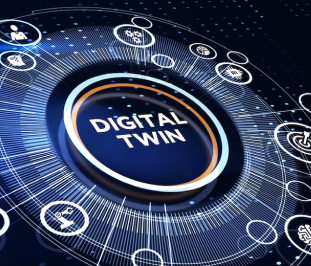
Since there are many different definitions of a digital twin, we should start the article by answering this question. A digital twin is defined as a virtual representation of a physical asset, person, or process. A digital twin consists of data collected from multiple sources, a layer of behavioral insights derived from this data, and visualizations. A simple 3D visualization or standalone simulation is not considered a digital twin. Multiple AI use cases, "what if" simulations, and visualizations can be built on top of the simulations.
For example, a digital twin can provide a 360-degree view of company systems, including all the details they collect about customers, such as online and in-store purchasing behavior, demographics, payment methods, and interactions with customer service. It also generates insights derived from data, such as the average length of customer service calls. Customer churn trend models or the prediction of products a customer might buy in their next purchase are AI examples that leverage digital twins.
A digital twin can also simulate the operation of real-world assets or processes, such as a factory production line and critical machine parts, providing information about average equipment failure times or the average time required to complete a product assembly. Predictive maintenance, process automation, and optimization are impressive examples of AI-powered digital twins. Digital twins accelerate the time to market for many applications and use cases because development teams do not have to spend time cleaning and restructuring raw data each time they build an application.
As a result, we see that digital twins reduce the time required to develop new AI-driven capabilities by up to 60%, and capital expenditures and operating expenses by up to 15%. They are also known to increase commercial efficiency by approximately 10%. CEOs are increasingly recognizing the importance and power of digital twins, and even mentioning them with increasing frequency in financial reports. Research shows that 70% of senior technology executives in large enterprises are researching and investing in digital twins. This interest, combined with rapidly advancing supporting technologies, is expected to result in more than $48 billion in spending on digital twin investments by 2026, representing a compound annual growth rate (CAGR) of 58%. We are already seeing some advanced digital twin applications.
Getting Started: The First Digital Twin
Which digital twin a company creates first is determined by priority value factors and reuse potential. It is also balanced by feasibility factors such as business support, data availability, quality, and accessibility. Let's look at some examples:
Companies often start by creating a data product, which is the core of the digital twin. The data product provides a high-quality, ready-to-use data set that is easily accessible to people in the company and can be used in different business challenges. The data product initially provides several structured data layers to mimic a physical asset in the world and improve the performance of its critical function. For example, a company can create a data product containing information about retail employee roles, availability, tenure, and store locations to help optimize the work schedule creation process. The data product is usually created in just a few months and starts providing value.
The digital twin continues to generate value over time by serving as a reusable source of truth that can form the basis for future use cases and is continuously improved over time. After supporting the data product with several use cases, its capabilities can be rapidly expanded thanks to AI. For example, teams can enrich the existing data product by transferring and feeding the data created by the use of the data product into the existing data product, enriching it with behavioral data layers such as trend models and possible interaction responses. Visualizations can also be added to simulate different scenarios. These improvements unlock more and more powerful predictive, prescriptive use cases and transform your data product into a digital twin. For example, an employee's digital twin can help the company develop AI-driven personal coaches that guide employees to improve their performance and productivity. It can also help managers identify the right interventions to keep employee satisfaction high.
Increasing Value by Combining Digital Twins
By connecting two or more digital twins, companies can simulate the complex relationships between different assets, enabling more complex use cases